
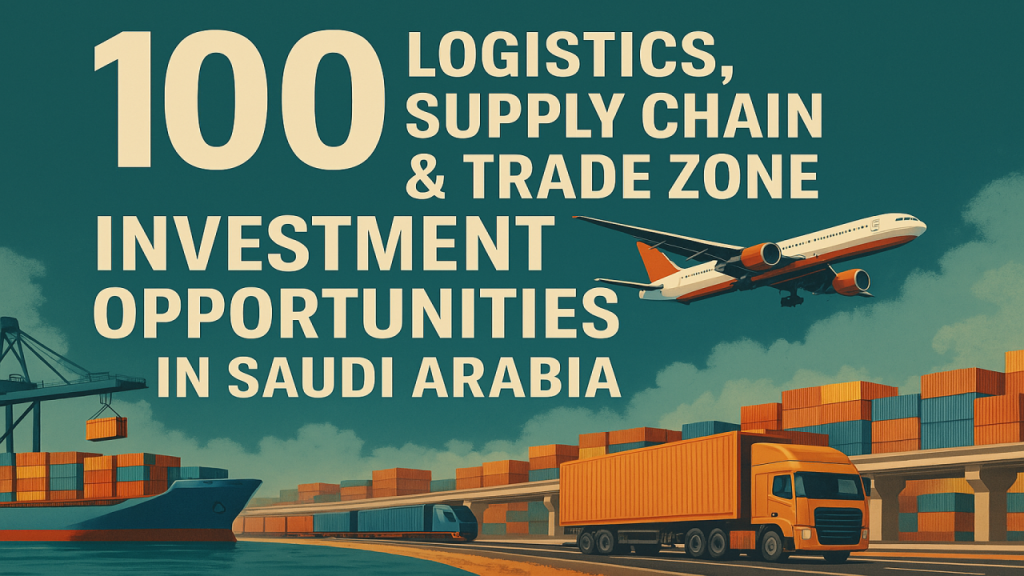
As a global logistics hub bridging Asia, Africa, and Europe, Saudi Arabia is fast-tracking supply chain transformation through infrastructure, technology, and policy. Vision 2030’s National Transport and Logistics Strategy aims to increase non-oil exports, boost logistics performance, and attract global trade operators. This edition identifies 100 investment-ready opportunities across ports, free zones, rail and road freight, e-commerce fulfillment, cold chains, logistics tech, and cross-border trade innovation.
I. Ports, Maritime & Free Zones
- Port Infrastructure Expansion at Jeddah Islamic Port and Dammam – Gateway capacity.
- Private Terminal Concessions and Logistics Parks in Red Sea Ports – Public-private collaboration.
- Integrated Customs Clearance and Digitization Platforms at Ports – Seamless import/export.
- Cold Chain and Perishable Cargo Terminals in Coastal Zones – Agro and pharma logistics.
- Maritime Free Zones and Bonded Warehousing Partnerships – Global trade facilitation.
- Port Community Systems (PCS) Implementation – Maritime digital backbone.
- Ship-to-Shore Crane and Handling Equipment Modernization – Port productivity.
- Cruise and RoRo Terminals for Mixed Cargo and Passenger Services – Modal convergence.
- Floating Port Facilities and Modular Logistics Units – Seasonal trade scalability.
- Maritime Green Fueling Infrastructure (LNG, Hydrogen) – ESG compliance.
II. Rail, Road & Inland Logistics Hubs
- Rail Freight Corridors for East-West Logistics – Linking Jeddah to Dammam.
- Dry Port Development in Riyadh and Medina – Inland customs and logistics.
- Multimodal Logistics Hubs in Economic Cities – Integrated trade platforms.
- Heavy Truck Parking and Rest Stations with Tech Amenities – Driver safety.
- Smart Tolling Infrastructure and Automated Weigh Stations – Road efficiency.
- Private Logistics Villages with Rail Access – First and last mile optimization.
- Truck-as-a-Service (TaaS) Leasing and Maintenance Hubs – SME fleet enablement.
- Road Freight Insurance Platforms and Fleet Risk Tech – Financial protection.
- Electric and Hybrid Truck Fleet Pilots – Decarbonized transport.
- Inland Container Depots (ICDs) with Smart Gate Tech – Efficiency multiplier.
III. Air Cargo & Airport Logistics
- Air Cargo Terminal Expansion at Riyadh and Jeddah Airports – Capacity alignment.
- Pharma and Cold Chain Air Freight Facilities – Temperature integrity.
- E-Commerce Cargo Villages Near Major Airports – Fulfillment acceleration.
- Digital Air Cargo Booking and Visibility Platforms – Real-time logistics.
- Drone Delivery Hubs and Vertiport Infrastructure – Urban freight frontier.
- Airport Bonded Warehouses for Duty-Free Logistics – Time-sensitive trade.
- Last-Mile Cargo Consolidation Points at Airports – Urban hub relief.
- Cargo Aircraft MRO and Hangar Services – Aviation support.
- Cross-Border Air Cargo Services to Africa and GCC – Regional expansion.
- Air-to-Sea and Air-to-Rail Transshipment Solutions – Multimodal agility.
IV. E-Commerce Fulfillment & Last-Mile Delivery
- Urban Fulfillment Centers in Riyadh, Jeddah & Khobar – Speed-to-customer.
- Same-Day Delivery Platforms with Warehousing Tech – Ultra-fast commerce.
- Returns Management and Reverse Logistics Solutions – Customer satisfaction.
- White-Label Fulfillment-as-a-Service for Retailers – Outsourced efficiency.
- Last-Mile EV Logistics Fleet Startups – Green delivery.
- Dark Store Models for Fast-Moving Goods – Urban inventory access.
- Micro-Fulfillment Centers in Shopping Malls and Residential Towers – Proximity innovation.
- Cold Chain Delivery Networks for Grocery and Pharma – Freshness and compliance.
- Drone and Robot Delivery Trial Programs in Gated Communities – Future readiness.
- Delivery Management Software and Real-Time Route Optimization – Driver productivity.
V. Cold Chain & Perishables Infrastructure
- Cold Storage Facilities in Major Agro and Seafood Zones – Supply preservation.
- Temperature Monitoring IoT for Food and Pharma Logistics – Data assurance.
- Cold Chain Asset Pooling & Leasing Platforms – Shared efficiency.
- Refrigerated Container Depot & Rental Services – Modular demand.
- Mobile Refrigerated Units for Seasonal Use – Festival and event logistics.
- Halal Cold Chain Certification & Tracking Startups – Integrity and trust.
- Air-to-Retail Fresh Produce Logistics Hubs – Perishable transit.
- Cross-Border Cold Chain Corridors to GCC and Africa – Food security networks.
- Cold Chain SaaS Platforms for Load Optimization – Digital transformation.
- Public-Private Cold Chain R&D Labs – Innovation in refrigeration.
VI. Logistics Technology & Automation
- Warehouse Robotics Integration Firms – Smart labor.
- Digital Freight Matching Marketplaces – Load and truck utilization.
- Blockchain for Logistics Traceability and Documentation – Paperless operations.
- AI-Driven Demand Forecasting for Inventory Planning – Data-led logistics.
- IoT Sensors for Shipment Location and Condition Monitoring – Real-time assurance.
- Fleet Telematics & Driver Performance Analytics Platforms – Efficiency and safety.
- Cloud-Based WMS and TMS Platforms for SMEs – Tech democratization.
- Smart Inventory Solutions for Omni-Channel Retailers – Integrated commerce.
- Drone Inventory Scanning Systems for Large Warehouses – Time savings.
- Logistics RPA (Robotic Process Automation) Startups – Administrative optimization.
VII. Industrial Zones, Customs & Special Economic Areas
- Private Free Zones in Logistics-Intensive Corridors – FDI attraction.
- Integrated Trade Parks for Assembly and Light Manufacturing – Near-market supply.
- Customs Compliance Advisory and Automation Firms – Regulatory ease.
- Export Processing Zones Near Ports and Airports – Value-added logistics.
- Cross-Border E-Invoicing and Paperless Trade Platforms – Trade transparency.
- National Single Window System Expansion via Startups – Digital efficiency.
- Inland Free Trade Warehousing Zones – Proximity warehousing.
- Smart Border Tech for Goods and Freight Tracking – Security with flow.
- Green Industrial Logistics Parks with ESG Certifications – Sustainability meets scale.
- Trade Zone Public Services Centers (HR, Legal, Banking) – Investor readiness.
VIII. Trade Finance, Risk & Data Platforms
- Trade Finance Aggregator Platforms for SMEs – Capital access.
- Invoice Factoring and Receivables Management Services – Liquidity release.
- Export Credit Insurance Brokers and Digital Platforms – Risk protection.
- Supply Chain Finance Platforms for Large Buyers – Network optimization.
- Blockchain-Based Letters of Credit and Trade Finance Protocols – Paperless compliance.
- Smart Contract Platforms for Trade Settlement – Automation at scale.
- Credit Scoring for Freight and Trade-Related Lending – Fintech synergy.
- Commodity Trading Platforms for Bulk Logistics – Agri, minerals, energy.
- Port and Warehouse Data Analytics Platforms – Insight and efficiency.
- Logistics ESG and Emissions Reporting Software – Green transformation.
IX. Talent, Training & Ecosystem Support
- Logistics and Supply Chain Vocational Academies – Skilled workforce.
- Logistics Startup Incubators in Dammam and Riyadh – Innovation boosters.
- Driver Training Schools with Fleet Simulation Labs – Safety first.
- Women in Logistics Training and Employment Programs – Inclusion.
- Academic Research Centers for Supply Chain Innovation – Evidence-based policy.
- Youth Logistics Bootcamps and Internship Exchanges – Early exposure.
- Public-Private Talent Pipelines for Trade Zones – Co-branded pathways.
- Executive Education for Logistics Leaders – Strategic capability.
- Real-Time Labor Market Data Platforms for Logistics Skills – Demand-driven.
- Gamified Logistics Education Apps for Students – Engagement at scale.
X. Vision 2030, GCC Integration & Strategic Growth
- Saudi-GCC Cross-Border Freight Corridors (Land, Sea, Air) – Regional synchronization.
- Vision 2030 Logistics KPI and Performance Monitoring Dashboards – Policy insights.
- Joint Logistics Ventures with GCC and African States – South-South trade.
- Trade Zone Collaboration Councils and Investor Forums – Ecosystem engagement.
- Trade Corridor Infrastructure Advisory Firms – Design and execution.
- National Freight Flow Simulation and Modeling Tools – Decision-making.
- Public Logistics Assets Optimization Consultants – Asset performance.
- Logistics Green Corridor Pilots with Incentive Mechanisms – Climate leadership.
- Digital Trade Corridor Branding and Outreach Platforms – Investor attraction.
- Vision 2030 Trade Facilitation Impact Funds – Catalytic capital.
Saudi Arabia’s emergence as a global logistics platform is fueled by smart investment, cross-border connectivity, and a commitment to innovation. These 100 opportunities reflect how global investors and local entrepreneurs can co-create a competitive, efficient, and resilient trade ecosystem—anchored in Vision 2030.