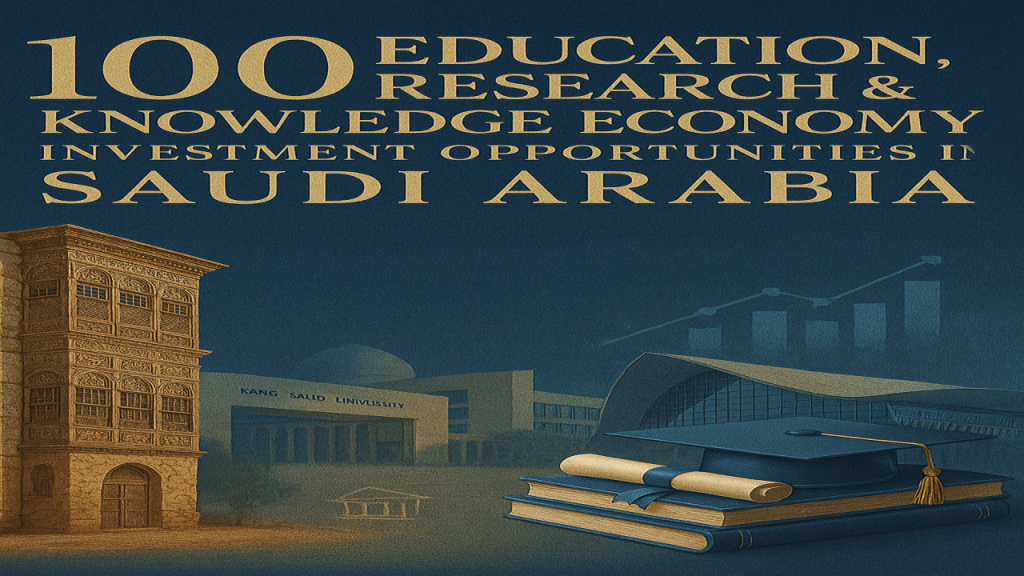
Saudi Arabia is building a world-class education system and knowledge economy to power Vision 2030. Through bold reforms, public-private collaboration, and digital innovation, the Kingdom is reshaping K–12, higher education, vocational training, and research to develop a globally competitive workforce. This edition highlights 100 investment-ready opportunities across edtech, schools, universities, scientific research, lifelong learning, and education infrastructure.
I. K–12 Education & Learning Innovation
- Private Bilingual and International K–12 Schools in High-Growth Cities – Foundational education.
- STEM-Focused Charter and Magnet Schools in Riyadh and Dhahran – Future skill building.
- Digital Curriculum Platforms with Arabic Content and Gamified Learning – Scalable engagement.
- Early Childhood Education Centers with Holistic Development Models – School readiness.
- Special Needs Education Centers and Inclusive Learning Services – Equity and access.
- Online Homework Help and Tutoring Marketplaces – On-demand support.
- Education Apps with Adaptive Learning Algorithms for Primary Students – Personalized pacing.
- Private School Franchising Models for Secondary Cities – Scalable growth.
- K–12 Leadership and Teacher Training Institutes – Talent investment.
- Islamic Values-Based Curriculum Design and Learning Resources – Cultural alignment.
II. Higher Education & University Partnerships
- Branch Campuses of Global Universities in Riyadh and NEOM – Academic excellence.
- Women’s Universities and STEM-Focused Higher Education Institutions – Gender parity.
- Applied Science and Technical Universities with Industry Links – Market relevance.
- Bilingual Liberal Arts Colleges with Global Accreditation – Diverse perspectives.
- Academic-Industrial Research Parks Adjacent to University Campuses – Innovation co-location.
- Scholarship Matching Platforms and International Admissions Advisory – Global access.
- Hybrid and Online-Only Higher Education Platforms – Flexible pathways.
- Alumni Networks and Fundraising Tech Platforms for Universities – Community building.
- University-Backed Incubators and Student Startup Hubs – Entrepreneurship pipelines.
- Digital Student Services Platforms for Housing, Mentoring, and Career Support – Student success.
III. Vocational Training & Workforce Development
- TVET Colleges Focused on Hospitality, Healthcare, and Construction – Job-ready skills.
- Work-Integrated Learning Programs and Dual Study Academies – Practice-based learning.
- Vocational Training Franchises in Secondary Cities – Access expansion.
- Digital Upskilling Platforms in Arabic for Adult Learners – Lifelong access.
- National Apprenticeship Portals and Employer Matching Tools – Pipeline platforms.
- Women’s Technical Training Centers with STEM Pathways – Inclusive participation.
- Agricultural and Food Industry Training Institutes – Food security.
- Creative and Design Trade Schools (Fashion, Film, Animation) – Culture industries.
- Green Skills Training Centers for Renewable Energy and Sustainability – Climate workforce.
- Skills Passport Platforms with Competency-Based Certification – Verified outcomes.
IV. EdTech Platforms & Digital Learning Tools
- Learning Management Systems (LMS) for Schools and Universities – Digital backbone.
- AI-Based Language Learning Apps in Arabic and English – Communication fluency.
- Virtual Labs for Science, Engineering, and Coding Education – Experiential learning.
- Education Chatbots and Smart Tutoring Bots for Students – Instant help.
- Digital Exam Prep Platforms for Qiyas, IELTS, SAT, and International Tests – Exam readiness.
- Learning Content Creators and Influencers for Edutainment – Localized relevance.
- Video Lecture Libraries for Blended and Flipped Classrooms – Teacher support.
- EdTech Incubators and Venture Studios Focused on the Arab World – Innovation hubs.
- Gamified Education Apps for Values and Citizenship Education – Cultural roots.
- AR/VR Tools for Immersive History, Culture, and Geography Learning – Deep learning.
V. Research, Innovation & Scientific Institutions
- University-Led Research Clusters with Industry Sponsors – Targeted outcomes.
- Specialized Research Institutes in Health, Environment, and Materials Science – Knowledge creation.
- R&D Commercialization Platforms for Licensing and Spin-Offs – Economic value.
- Open Access Scientific Publishing and Arabic Knowledge Portals – Dissemination.
- Women in Science Research Fellowships and Labs – Inclusive academia.
- Graduate Research Fellowships for Saudi Scholars Abroad – Global talent development.
- Clinical Trials Infrastructure and Medical Research Platforms – Health leadership.
- Innovation Policy Labs for AI, Fintech, and Sustainable Development – Foresight.
- Cross-Border Research Collaborations with GCC and Global Institutions – Scientific diplomacy.
- IP Management and Patent Filing Platforms for Universities and Startups – Innovation protection.
VI. Lifelong Learning, Literacy & Adult Education
- Adult Education Centers Focused on Literacy and Numeracy – Foundational skills.
- Online Lifelong Learning Platforms for Retired and Mid-Career Learners – Brain gain.
- Digital Literacy Training Programs for Senior Citizens – Inclusion at all ages.
- Mobile Learning Labs and Pop-Up Classrooms for Rural Communities – Reach equity.
- Arabic MOOCs and Skill Courses for Global Learners – Content leadership.
- Financial Literacy Programs for Youth and Adults – Empowered decision-making.
- Parent Education and Family Learning Centers – Intergenerational knowledge.
- Workforce Upskilling Grants and Micro-Credential Incentives – Shared value.
- Public Library Innovation Hubs with Tech, Arts, and Maker Spaces – Community learning.
- Literacy and Numeracy Assessment Tools with Localized Standards – Measurement.
VII. Education Real Estate & Infrastructure
- Education Zones in New Urban Developments (e.g., NEOM, Qiddiya) – Learning districts.
- School Construction PPPs Bundled with Community Facilities – Integrated planning.
- Green School Building Design and Sustainable Campus Projects – Climate responsibility.
- Modular School Construction Firms for Remote Areas – Flexibility and speed.
- Student Housing Developments with Transit-Oriented Design – Mobility alignment.
- Kindergarten and Nursery School Franchises in Suburban Districts – Early education access.
- Sports and Arts Facility Management Firms for Schools – Whole-child development.
- On-Campus Energy, Water, and Waste Efficiency Startups – School sustainability.
- Private University Campus Real Estate Development and Operations – Long-term returns.
- E-Sports, Robotics, and Innovation Labs in Education Infrastructure – Modern capacity.
VIII. Education Policy, Governance & Quality Assurance
- School Accreditation and Curriculum Evaluation Services – Excellence assurance.
- Teacher Licensing Platforms and Professional Growth Dashboards – Career pathways.
- Data-Driven School Inspection and Performance Analytics Tools – Governance intelligence.
- Education Law, Policy, and Regulatory Advisory Firms – Institutional clarity.
- EdTech Standards and Digital Content Certification Bodies – Market integrity.
- Student Voice and Feedback Platforms for School Improvement – Participation.
- National Education Data Warehouse and API Ecosystems – Research enablement.
- Inclusive Education Auditing and Design Services – DEI metrics.
- ESG Reporting Frameworks for Education Sector Investments – Impact visibility.
- Cross-GCC Policy Coordination Platforms for Learning Mobility – Regional harmonization.
IX. Culture, Creativity & Experiential Learning
- STEAM Labs and Project-Based Learning Studios in Schools – Innovation mindsets.
- School-Based Entrepreneurship Incubators and Student Cooperatives – Applied learning.
- Cultural Heritage Education Programs and Museum Partnerships – Identity awareness.
- Language Immersion Programs for Arabic, English, and Chinese – Global fluency.
- Outdoor Education Camps and Eco-Schools for Environmental Literacy – Nature connection.
- Student Exchange and International Study Tour Agencies – Exposure and confidence.
- Music, Arts, and Theater Integration into K–12 and Higher Ed – Creative growth.
- Virtual Culture Learning Platforms and Historic Simulations – Time travel learning.
- Debate, Model UN, and Public Speaking Program Franchises – Leadership development.
- Service Learning and Social Impact Curriculum Builders – Civic activation.
X. Vision 2030 Strategy, Impact & Ecosystem Mobilization
- Education Venture Capital Funds for EdTech and Training Startups – Innovation capital.
- Public-Private Partnership Advisory for Education Infrastructure – Blended finance.
- Annual Education Investment Forums and EdTech Showcases – Ecosystem building.
- Vision 2030 Aligned Learning Outcome and Readiness Dashboards – Performance insight.
- Teacher Capacity Development Institutes Linked to Vision Goals – System leadership.
- National Curriculum Innovation Labs for Competency-Based Learning – Next-gen content.
- Data Sharing and AI in Education Governance Platforms – Smart policy.
- Learning City Strategy and Planning Toolkits for Municipalities – Local engagement.
- Saudi Knowledge Economy Index and Global Education Benchmarking Tools – Progress tracking.
- Unified Education Investment Guide and Opportunity Portal for Vision 2030 – Market entry clarity.
Education is the foundation of Saudi Arabia’s transformation into a knowledge-based society and innovation-driven economy. These 100 opportunities are blueprints for building the Kingdom’s future—where students, educators, researchers, and global partners converge to learn, create, and lead on a world stage aligned with Vision 2030.